
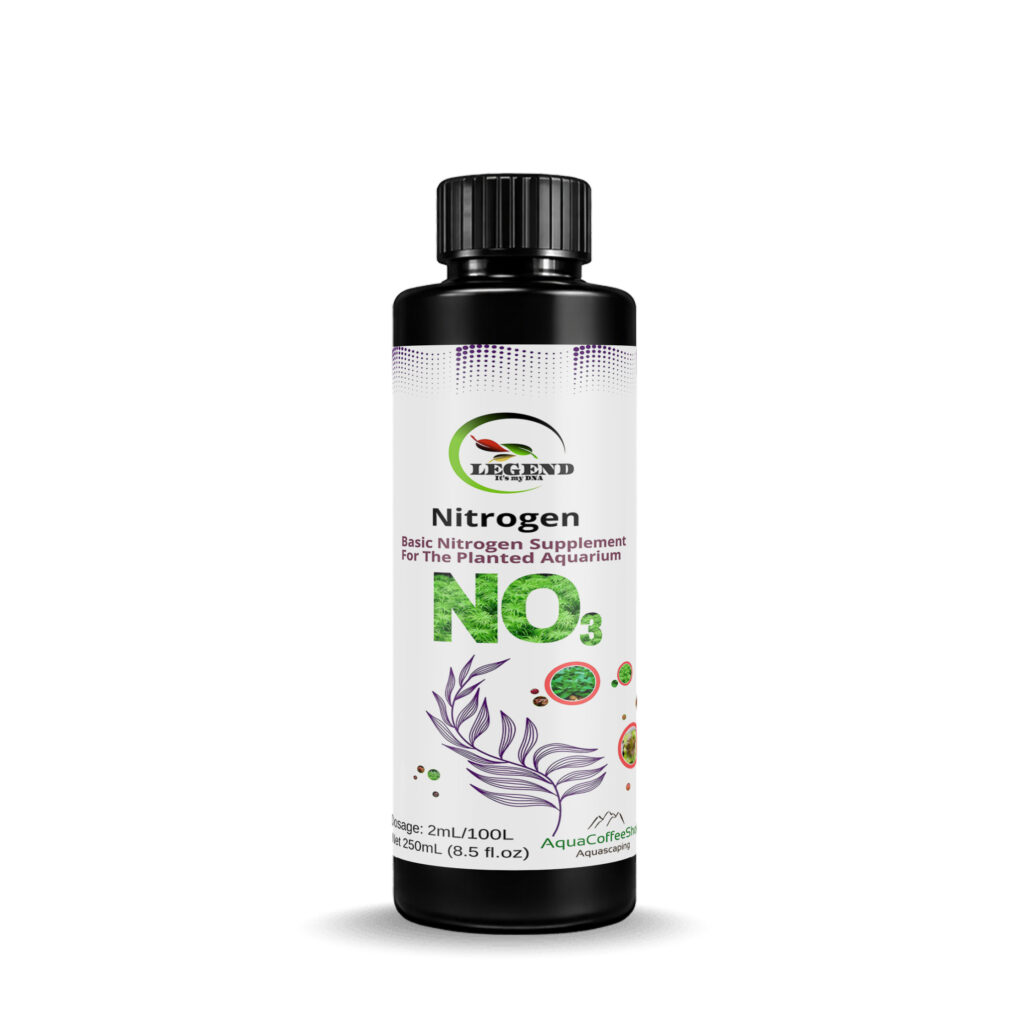
After carbon, nitrogen is the nutrient plants need in the largest amount. It is a building block of proteins, enzymes, DNA and chlorophyll, so almost every process in a growing plant depends on it.
What nitrogen does
- It forms part of chlorophyll, the green pigment that captures light.
- It is needed for the amino acids that make up proteins and enzymes.
- It is part of the genetic material that controls growth and cell division.
- It drives the formation of new leaves and shoots.
How plants take it up
Aquatic plants absorb nitrogen mainly as ammonium and nitrate, through both their roots and leaves. Ammonium is taken up readily, but in an aquarium it must stay very low because it converts to toxic ammonia at higher pH. Nitrate is the safer form to supply, and plants convert it internally into the compounds they need.
Signs of nitrogen deficiency
- Older leaves turn evenly pale yellow, starting at the tips
- Growth slows and new leaves stay small
- Red plants lose intensity or turn pale
- Stems become thin and older leaves drop
Because plants can move nitrogen from old to new tissue, the oldest leaves show the shortage first.
Too much nitrogen
Excess nitrogen is less common in planted tanks, but very high nitrate combined with low light or low CO2 can encourage algae and soft, weak growth. For most planted aquariums, 10 to 25 mg/l of nitrate is a good target.
Supplying nitrogen
Fish waste supplies some nitrogen, but in a well-planted tank it is rarely enough. LGND Nitrogen lets you dose nitrogen precisely and independently, so you can raise it without changing phosphate or potassium. Test nitrate weekly and adjust your dose to keep it within the target range.