Overview
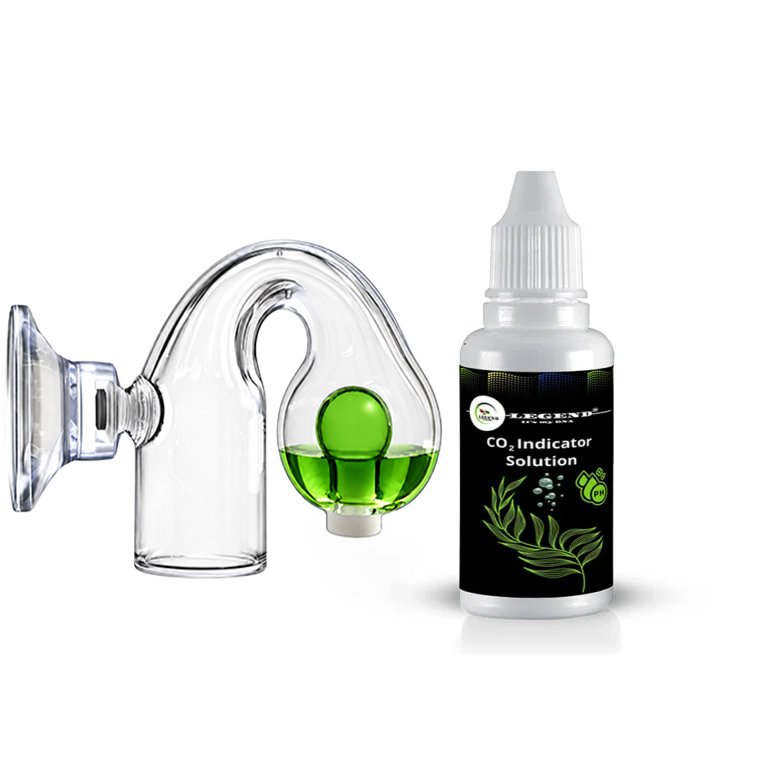
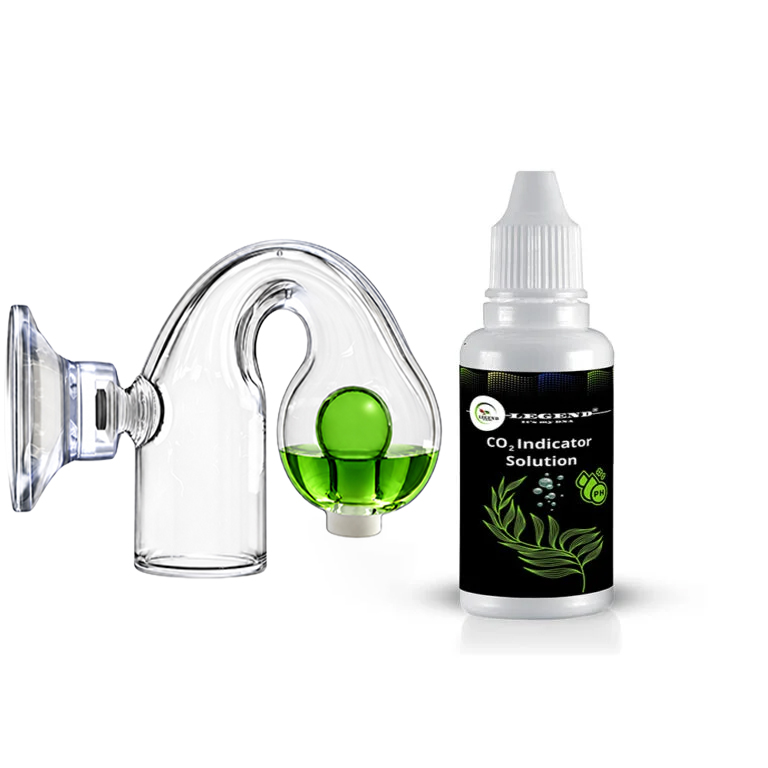
LGND Iris CO2 Drop Checker provides continuous visual monitoring of the dissolved CO2 level in planted freshwater aquariums, making it easier to maintain stable conditions for healthy plant growth and aquatic life.
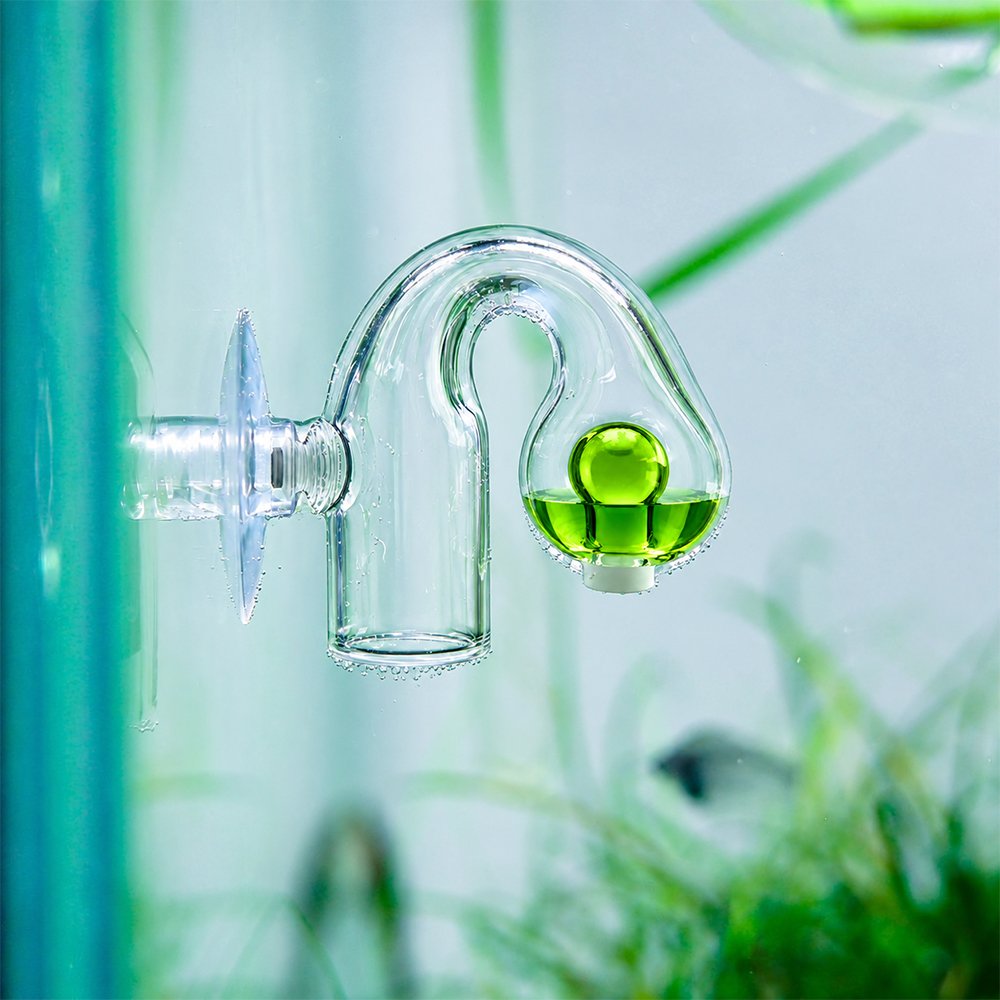
Its distinctive dual-colour design combines a reactive indicator chamber with a stable lime-green reference sphere. The indicator solution changes colour according to the amount of CO2 dissolved in the aquarium water, while the green sphere remains unchanged and provides a convenient visual reference for the desired CO2 level.
When the indicator solution is blue, the aquarium contains insufficient CO2. When its colour closely matches the lime-green reference sphere, the CO2 level is within the intended optimal range. A yellow indicator warns that the CO2 concentration is too high and should be reduced.
Unlike conventional drop checkers, which require the colour to be compared with a separate chart, LGND Iris places the reference colour directly beside the indicator solution. This makes small colour differences easier to recognise under normal aquarium lighting.
For reliable and consistent readings, we recommend using LGND CO2 Indicator Solution. Its ready-to-use formulation helps determine the approximate CO2 level in the aquarium and supports gradual, precise adjustment of the CO2 supply.
The indicator solution does not come into direct contact with aquarium water. Dissolved CO2 passes from the aquarium water into the air trapped inside the drop checker and then reaches the indicator chamber, where it gradually changes the colour of the solution.
Directions
Before installation, rinse the exterior of LGND Iris CO2 Drop Checker carefully with clean water. Do not use soap, detergents or abrasive cleaning materials.
Attach the supplied suction cup and position the drop checker inside the aquarium, fully submerged and clearly visible. For a representative reading, install it away from the CO2 diffuser, rising CO2 bubbles and strong filter outlets, as direct exposure to concentrated CO2 or powerful water flow may produce a misleading local reading.
For clear and consistent colour indication, LGND CO2 Indicator Solution is recommended. It helps identify changes in the dissolved CO2 level and allows the CO2 supply to be adjusted more precisely.
After installation, allow approximately two to three hours for the indicator colour to respond and stabilise. Following any adjustment to the CO2 supply, allow sufficient time for the colour to stabilise again before making another adjustment.
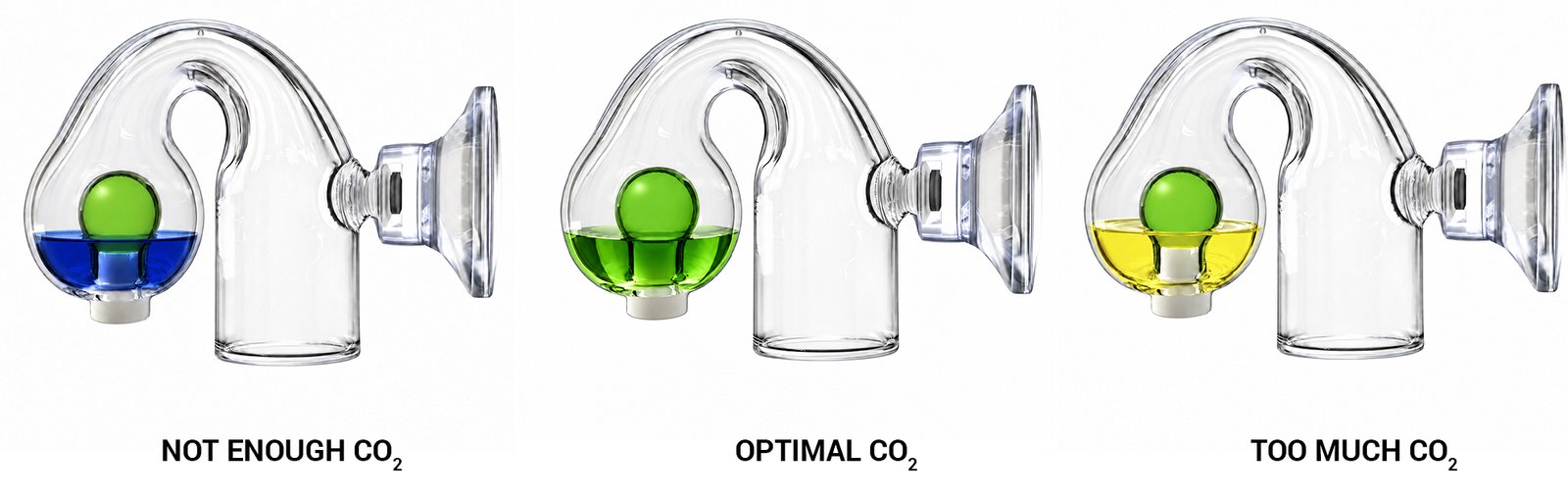
Blue indicates insufficient CO2. Green indicates the optimal CO2 range. Yellow indicates excessive CO2 and the CO2 supply should be reduced carefully.
Always adjust the CO2 supply gradually and monitor fish, shrimp and other aquarium inhabitants closely. The drop checker provides a delayed visual indication and should not be treated as an immediate or exact measurement of dissolved CO2.
FAQ
What does LGND Iris CO2 Drop Checker measure?
It provides a continuous visual indication of the approximate dissolved CO2 level in a planted freshwater aquarium. It is intended to assist with adjusting and maintaining a stable CO2 supply rather than provide a laboratory-grade numerical measurement.
What is the purpose of the green sphere?
The lime-green sphere is a stable reference colour representing the intended optimal CO2 range. It does not measure CO2 and does not change colour. The reactive indicator solution surrounding it should be compared directly with the sphere.
Which liquid changes colour?
Only LGND CO2 Indicator Solution in the surrounding indicator chamber changes colour. The green reference sphere remains the same colour at all times.
What do the different colours mean?
Blue indicates insufficient CO2. Lime green indicates the intended optimal range. Yellow indicates that the CO2 concentration is too high and may become harmful to fish, shrimp and other aquatic animals.
Does the indicator solution come into contact with aquarium water?
No. The indicator solution is separated from the aquarium water by a trapped pocket of air. CO2 moves through this air space and gradually changes the pH and colour of the indicator solution.
Why should I use LGND CO2 Indicator Solution instead of aquarium water?
LGND CO2 Indicator Solution is prepared specifically for use in aquarium drop checkers. Using aquarium water would make the result dependent on the aquarium's carbonate hardness, buffering compounds and other dissolved substances, producing an unreliable colour interpretation.
How much indicator solution should I add?
Add enough solution to form a clearly visible reservoir around the lower section of the green reference sphere. Leave sufficient empty space above the liquid and make sure the solution does not enter the curved glass passage.
Why does the colour not change immediately?
A drop checker operates through gradual gas exchange. It normally requires approximately two to three hours to reflect a significant change in aquarium CO2. It should therefore be treated as a delayed monitoring device rather than an immediate warning system.
Where should the drop checker be positioned?
Install it inside the aquarium in an area with good, representative water movement. Positioning it away from the diffuser and preferably on the opposite side of the aquarium helps determine whether CO2 is circulating effectively throughout the tank.
Why is the indicator still blue after increasing the CO2 supply?
Allow at least two to three hours after making an adjustment. If the solution remains blue, check the regulator, diffuser, tubing and circulation. Confirm that the drop checker contains a trapped air pocket and that the indicator solution is fresh and has not been diluted with aquarium water.
What should I do if the indicator becomes yellow?
Reduce the CO2 supply immediately and increase surface agitation or aeration if fish or shrimp show signs of distress. Continue monitoring the aquarium until the indicator returns to a safer colour and all livestock behave normally.
How often should the indicator solution be replaced?
Replace it whenever the colour becomes faded, contaminated or difficult to interpret. Regular replacement provides clearer colour comparison and more consistent monitoring.
How should the glass be cleaned?
Remove the drop checker by pulling gently on the suction cup rather than the glass. Empty the indicator solution and rinse the glass carefully with warm water. Do not use abrasive tools or household detergents. Allow the glass to dry completely before refilling it with fresh LGND CO2 Indicator Solution.
Safety
LGND Iris CO2 Drop Checker is manufactured from glass and must be handled carefully. Do not use it if the glass is cracked, chipped or otherwise damaged.
When installing, removing or repositioning the drop checker, handle it by the suction cup or the thicker glass body. Do not pull, twist or place sideways pressure on narrow glass sections.
LGND CO2 Indicator Solution is intended exclusively for use inside aquarium drop checkers. Do not swallow the solution and avoid contact with the eyes. In case of accidental contact, rinse thoroughly with clean water. Keep the drop checker and indicator solution out of reach of children and pets.
The drop checker provides a delayed visual indication and must not be relied upon as an emergency alarm or automatic CO2 controller. Excessive CO2 can cause respiratory distress and may be fatal to fish, shrimp and other aquatic animals.
Always increase CO2 gradually and observe aquarium inhabitants closely. If fish begin breathing rapidly, gathering near the surface or displaying unusual behaviour, turn off or reduce the CO2 supply immediately and increase aeration.
Intended exclusively for planted freshwater aquariums.