
Every aquarium relies on an invisible process that turns toxic waste into harmless compounds. This is the nitrogen cycle. Understanding it is the single most important step to keeping fish healthy, especially in a new tank.
Where it starts: ammonia
Fish excrete ammonia through their gills and in their waste, and uneaten food and dead plant matter release more as they decay. Ammonia is highly toxic, even in small amounts. How dangerous it is depends on pH and temperature: in acidic water most of it exists as the far less toxic ammonium, while in warm, alkaline water a larger share is free ammonia.
Step one: ammonia to nitrite
Nitrifying bacteria that colonise the filter, substrate and decorations use ammonia as an energy source and convert it to nitrite. Nitrite is still toxic: it interferes with the blood’s ability to carry oxygen.
Step two: nitrite to nitrate
A second group of bacteria oxidises nitrite to nitrate. Nitrate is much less harmful and is used by plants as a nitrogen source. Whatever plants do not take up is removed with regular water changes.
Closing the loop
In some tanks, oxygen-poor zones deep in the substrate or in specialised filters host bacteria that turn nitrate into nitrogen gas, which escapes into the air. In most home aquariums, though, plants and water changes do this job.
Cycling a new aquarium
A new tank has no bacteria colony yet. Building one takes time, usually four to six weeks. During this period ammonia rises first, then nitrite, and finally both fall to zero as nitrate appears. Only then is the tank ready for its full stock of fish.
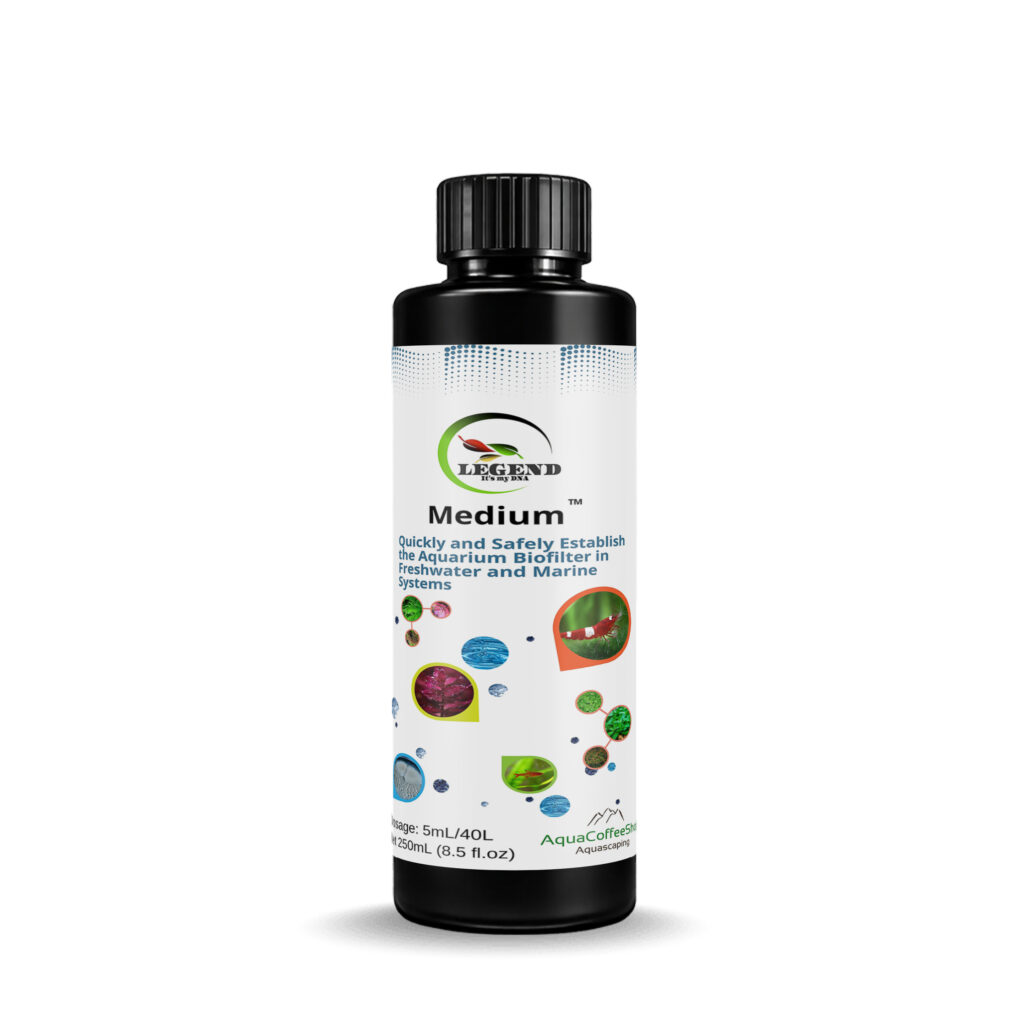
- Add live bacteria such as LGND Medium from day one to shorten the start-up phase.
- Provide a small, steady ammonia source, such as a pinch of food, so the bacteria have something to feed on.
- Test ammonia, nitrite and nitrate every few days.
- Add fish gradually, a few at a time, so the colony can keep pace.
Keeping the cycle stable
- Never clean all filter media at once and rinse it in tank water, not chlorinated tap water.
- Always use a water conditioner when adding tap water.
- Avoid overfeeding and remove dead plants or fish promptly.
- Be aware that some medications can harm the filter bacteria; test more often during treatment.
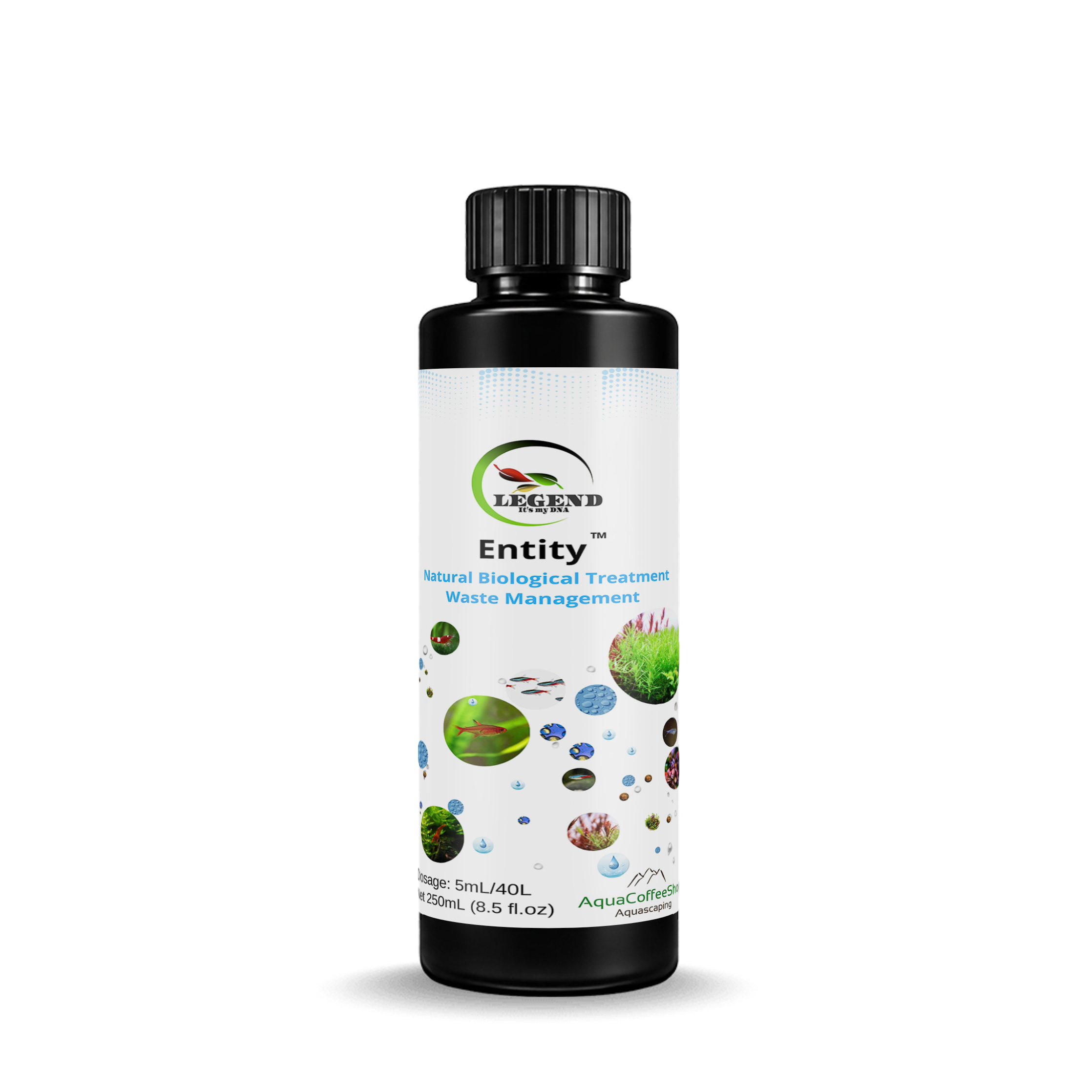
- LGND Entity helps break down organic waste and sludge that would otherwise feed ammonia spikes.
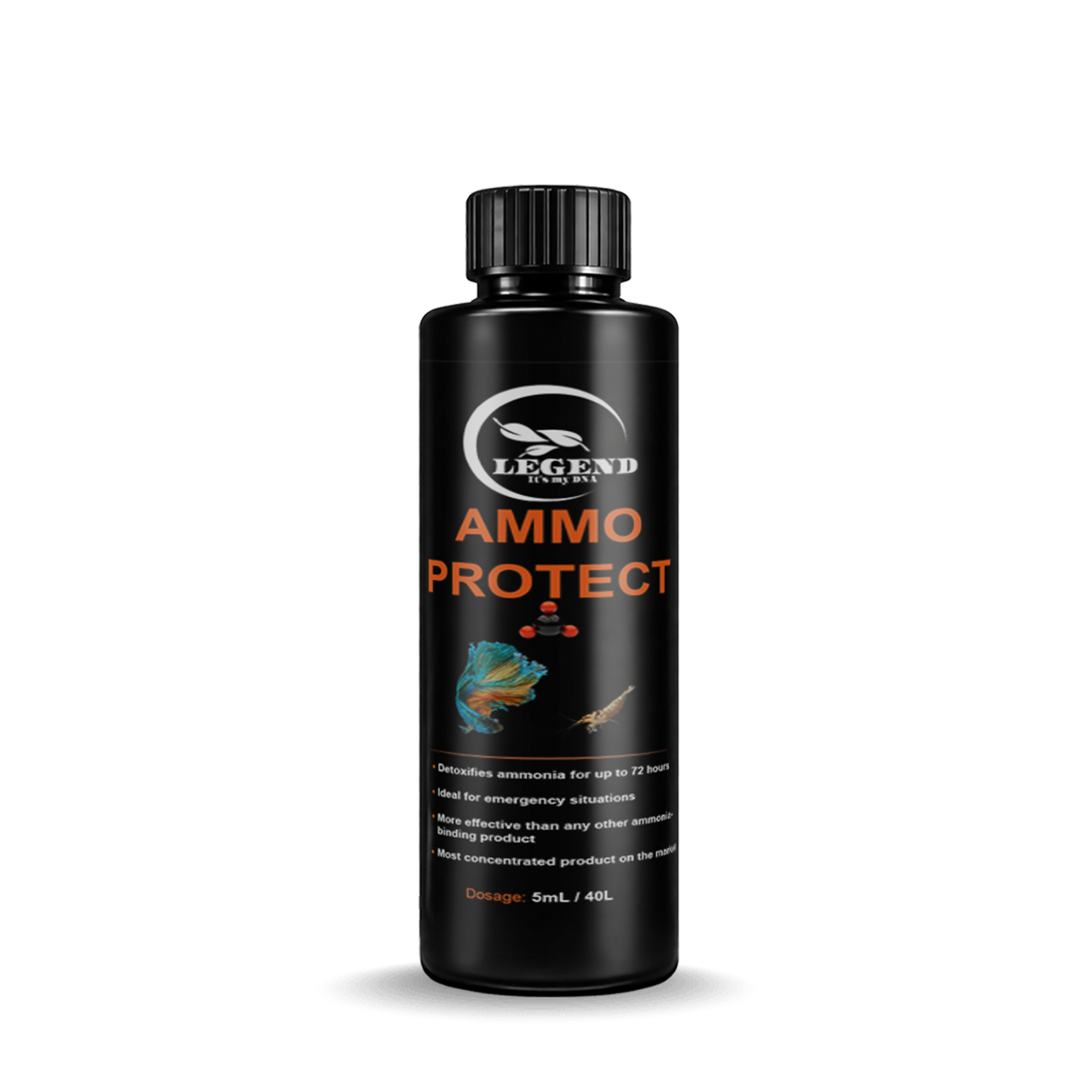
Emergency: if ammonia or nitrite climbs in an established tank, do a partial water change and reduce feeding. LGND AmmoProtect detoxifies ammonia for up to 72 hours while the biological filter recovers.