New plants can bring unwanted guests into a clean aquarium: black beard algae spores, other algae, pest snails and parasites. A short bath in a diluted LGND Hades AlgaeKillEX™ solution removes them before they ever reach your tank. Here is how to do it safely, step by step.
The short version
- Mix 1 part Hades with 20 parts water (for example 50 mL Hades in 1 litre of water).
- Prepare a second container with water treated with LGND Priority™.
- Soak the plant in the Hades solution for no more than 5 minutes (less for delicate plants).
- Rub off any loose algae, soak the plant in clean water for 10 minutes, then in the Priority water for 5–10 minutes.
- Rinse thoroughly and plant it.
When to give your plants a Hades bath
- New plants sold in pots or bought from other hobbyists, before they go into your aquarium.
- Plants covered in algae, including black beard algae, that you want to clean outside the tank.
- Plants carrying pest snails, eggs or other hitchhikers.
- Artificial plants and decorations covered in algae.
Plants grown in vitro (in sealed cups of gel) are already free of algae and pests, so they do not need this treatment.
What you need
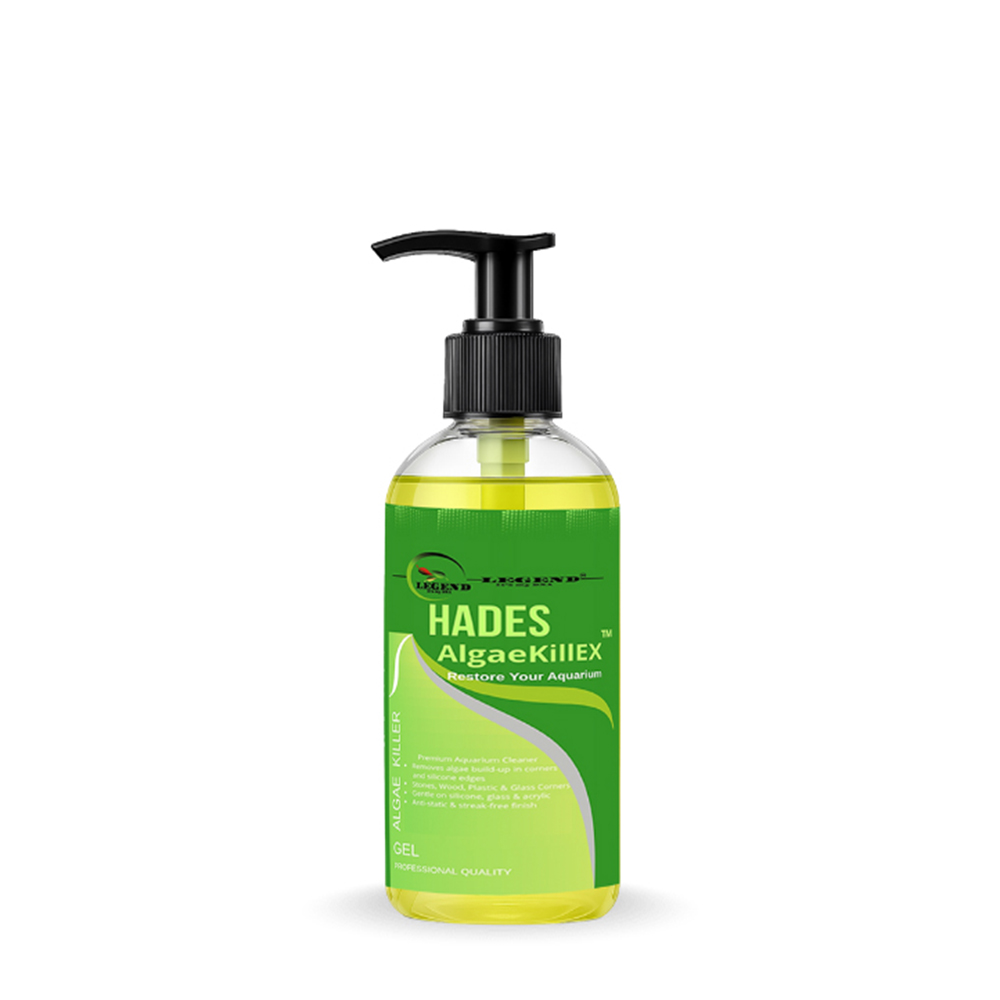
- LGND Hades AlgaeKillEX™
- Two clean containers (a bowl and a bucket work well) that you only use for aquarium jobs
- A measuring jug or syringe
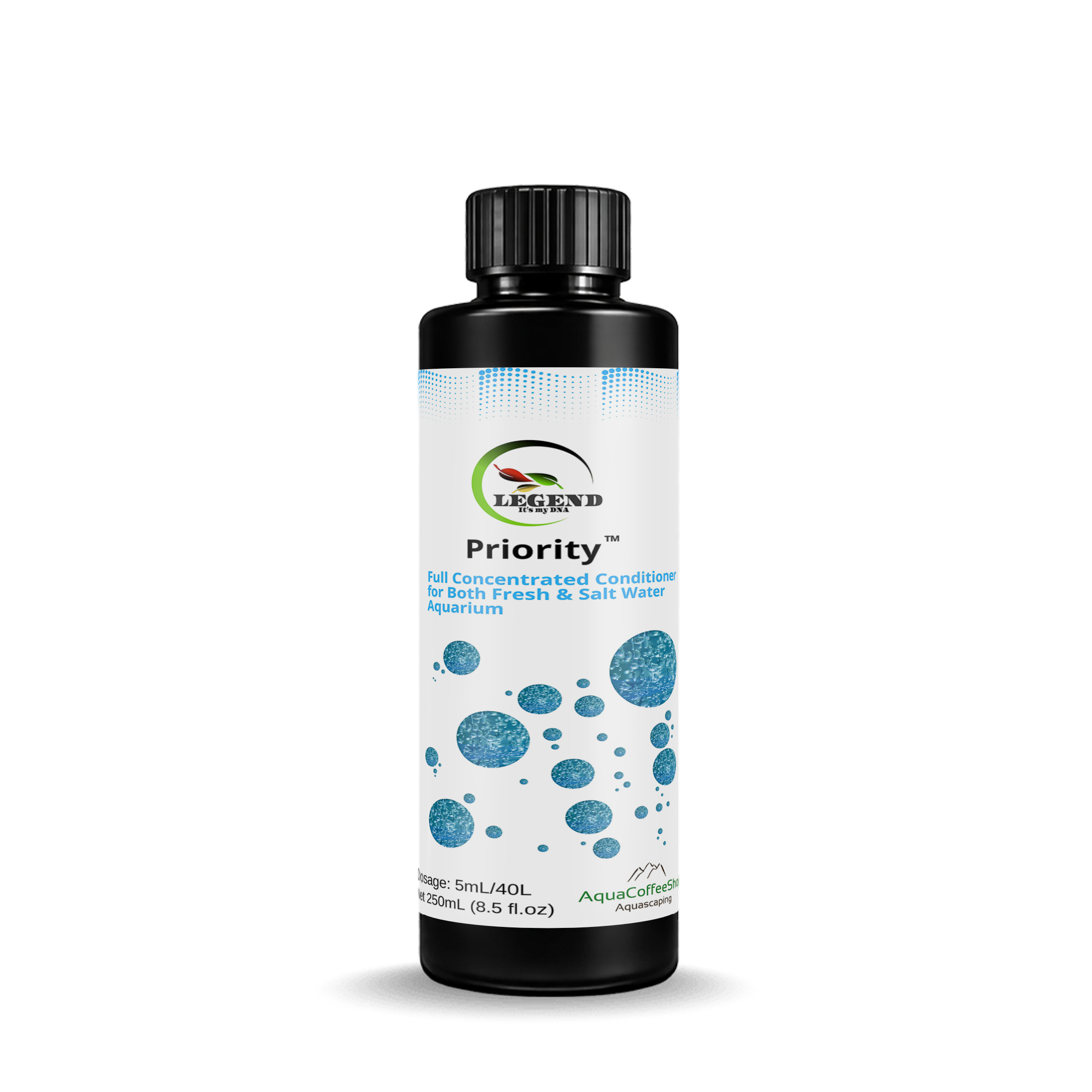
- LGND Priority™ water conditioner
- Gloves, a timer, and a soft toothbrush for rubbing off algae
How to mix the solution
The rule is 1 part Hades to 20 parts water. Always add Hades to the water, not the other way round, and make enough to cover the plants completely.
Hades solution mixer
Type how much water you are using and see exactly how much Hades to add.
| Water | LGND Hades |
|---|---|
| 500 mL | 25 mL |
| 1 litre | 50 mL |
| 2 litres | 100 mL |
| 4 litres | 200 mL |
| 5 litres | 250 mL |
Safety first. Wear gloves and work in a well-ventilated room. Never mix Hades with other cleaning products, especially acids or ammonia-based cleaners. Never pour the solution into the aquarium, and keep it away from children and pets.
Step by step
- Prepare both containers firstContainer 1: the Hades solution (1 part Hades to 20 parts water). Container 2: clean water with a dose of LGND Priority™. Having both ready means the plant never stays in the Hades solution longer than it should.
- Soak the plant in the Hades solutionTake the plant out of its pot (or out of the aquarium), remove the rock wool if there is any, and submerge it completely. Live plants: maximum 5 minutes. Delicate plants, such as mosses and very fine-leaved plants, should stay in for even less time. Use a timer.
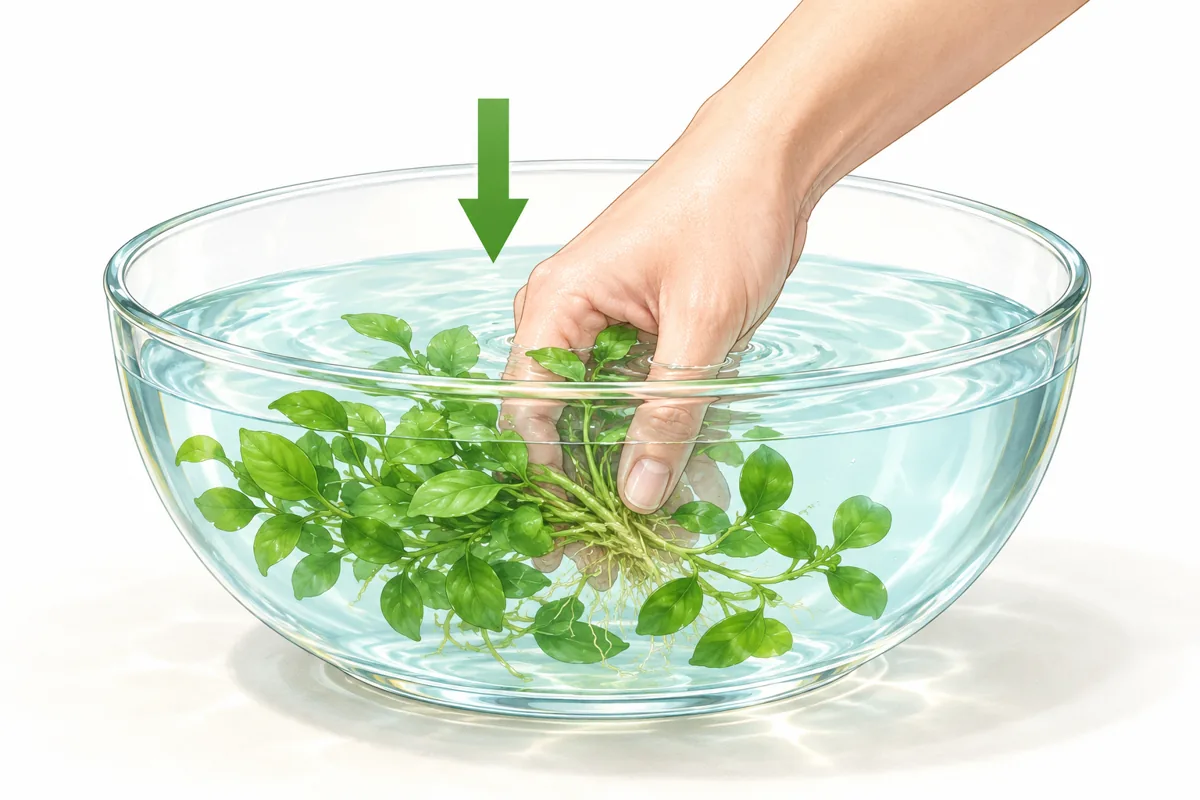
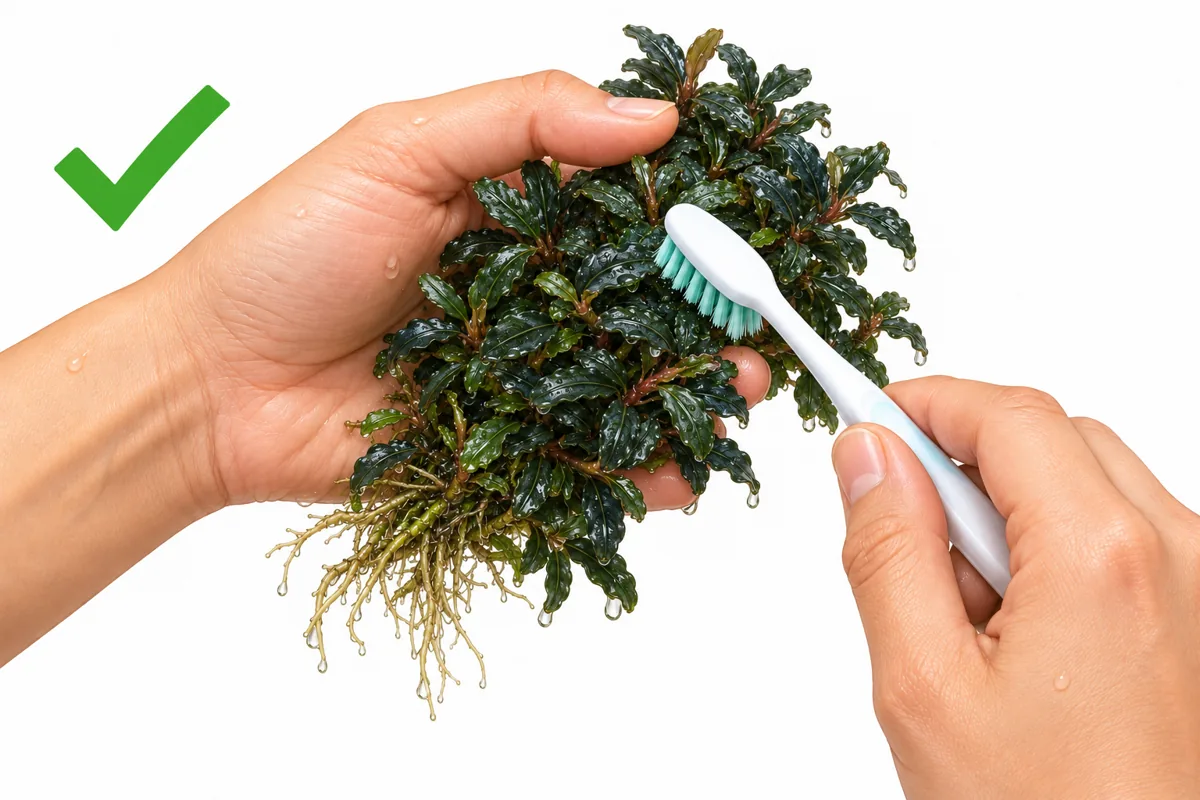
- Rub off the loosened algaeTake the plant out and gently rub the leaves with your fingers or a soft toothbrush to remove any algae that has come loose.
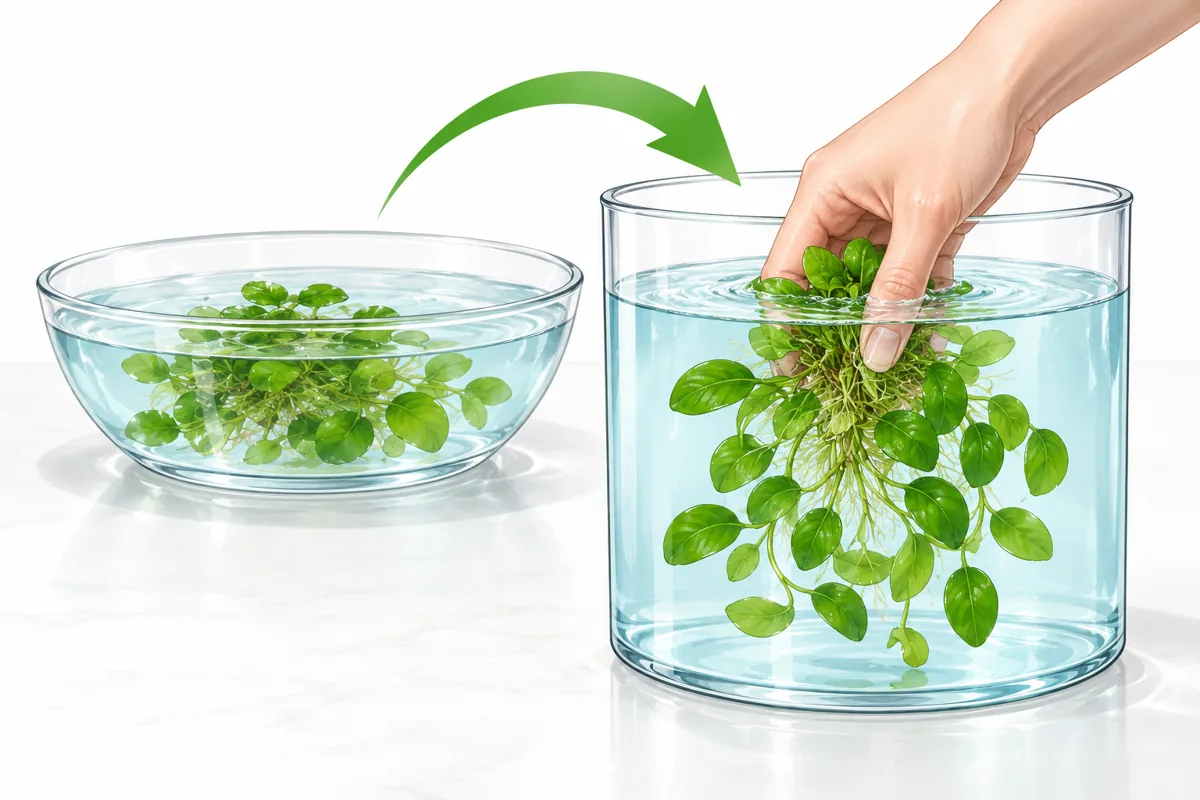
- Soak in clean water for 10 minutesSubmerge the plant in a bucket of clean water and leave it for 10 minutes.
- Soak in Priority-treated water for 5–10 minutesMove the plant into container 2. The water conditioner neutralises any remaining Hades on the leaves and roots.
- Rinse thoroughly and plantGive the plant a final rinse and it is ready to go into your aquarium.
Tip: work on one plant species at a time. Hardy plants such as Anubias, Java fern and Bucephalandra cope well. If you are unsure about a plant, try a shorter soak first.
Artificial plants and decorations
You can clean artificial plants in exactly the same way. Keep in mind that Hades may slowly fade their colours over time. If you do not have water conditioner at hand, artificial plants can instead be rinsed and left to dry out completely before they go back into the tank. Do not dry out live plants: they need the conditioned water soak.
For a gentle, overnight clean of artificial plants and ornaments, you can also use LGND Plastic Plant & Ornament Cleaner™.
Frequently asked questions
Why do I need to use water conditioner afterwards?
Even after rinsing, small traces of the solution can stay on the leaves and roots. A soak in water treated with LGND Priority neutralises them, so nothing harmful goes into your aquarium.
Can I treat plants that are already in my aquarium?
Yes, but take them out first. Never add the Hades solution to the aquarium itself. Treat the plant outside the tank, follow all the rinsing steps, then replant it.
Will this kill black beard algae spores?
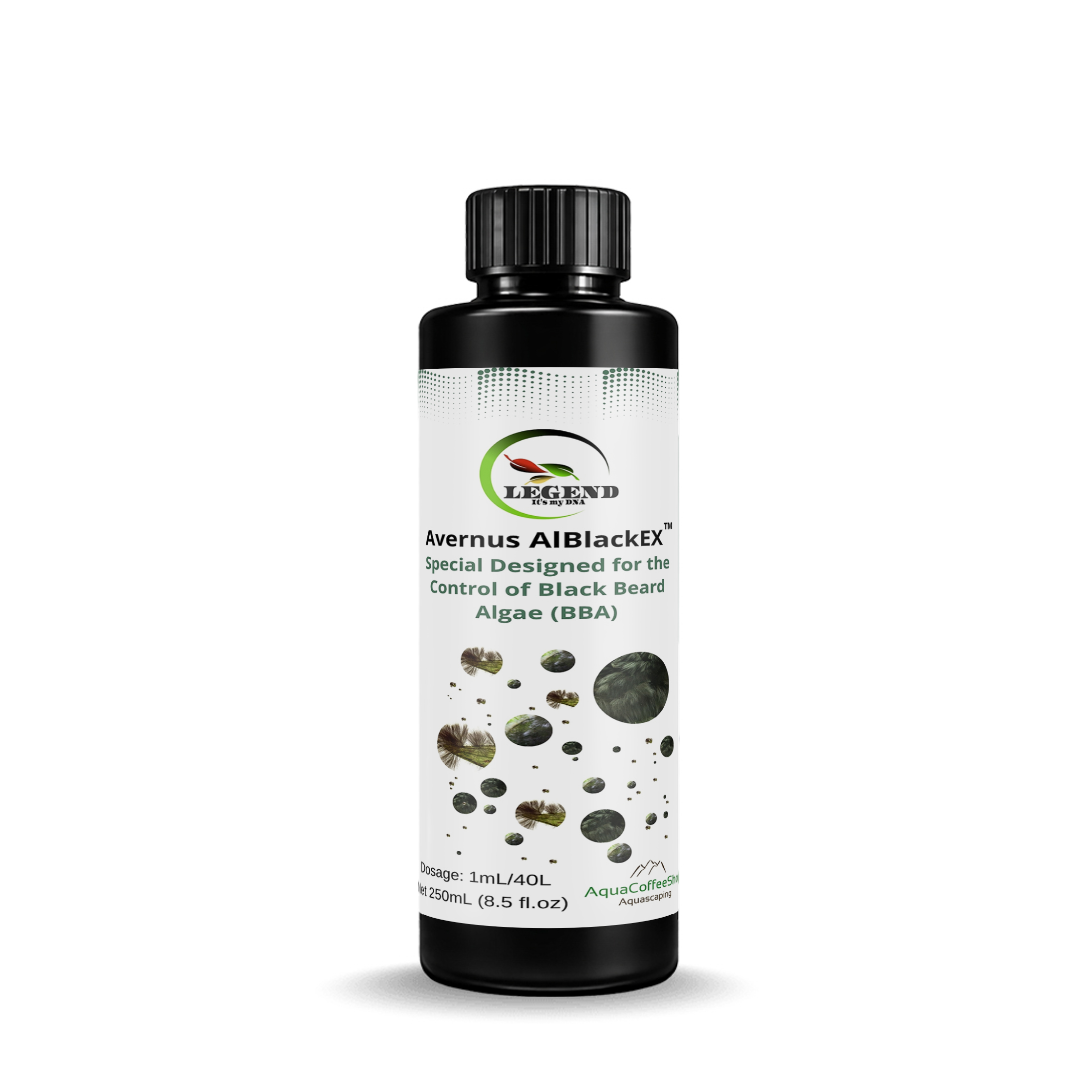
A Hades bath removes algae and spores from the plant before it enters your tank, which is one of the best ways to stop BBA spreading. For BBA already growing in your aquarium, use Avernus AlBlackEX.
Can I use scented or gel bleach instead?
No. Scented and gel products do not rinse off well and can leave residue on the plants. Use LGND Hades, diluted exactly as described.
My plant looks pale after the bath. Is it dead?
A soak that is too long or too strong can damage delicate leaves. Remove any damaged leaves; healthy roots and rhizomes usually produce new growth. Next time, use a shorter soak.
Everything for a safe plant bath
Not sure if your plant can handle a Hades bath? Send us a photo and we will advise you.
AquaCoffeeShop: aquarium care made simple.