Ammonia is formed from the metabolism of protein and is the major waste product of fish. The majority of ammonia from fish is excreted through the gills, with relatively little being lost through urine and faeces. Ammonia is also formed as uneaten food or other organic matter in an aquarium decomposes.
High concentrations of ammonia in the water make it difficult for fish to eliminate ammonia from their bodies. This build-up of ammonia can cause stress, gill and internal organ damage, and eventually death.
Why ammonia is toxic
Total ammonia is made up of two components: un-ionised ammonia (NH3) and ionised ammonia (NH4+). Un-ionised ammonia is extremely toxic to fish, whereas ionised ammonia is not. The proportion of un-ionised to ionised ammonia shifts with pH and water temperature: as pH or temperature increases, more of the ammonia shifts to the un-ionised, toxic form.
Un-ionised ammonia begins causing gill damage at approximately 0.05 mg/L and death at approximately 2.0 mg/L. Keep in mind that most test kits measure total ammonia, not un-ionised ammonia, and may make no reference to the difference. A table is used to calculate the portion of un-ionised ammonia from total ammonia.
How the biofilter removes ammonia
Ammonia is removed from an aquarium through the use of a biofilter. The biofilter provides a surface on which nitrifying bacteria grow. These bacteria consume ammonia and produce nitrite, which is also toxic to fish. Other nitrifying bacteria in the biofilter consume nitrite and produce nitrate.
Nitrate is not toxic to most freshwater fish except at high levels, and it can be kept low through regular partial water changes. Some nitrate is also used by plants. In natural systems and some aquariums, nitrate is converted to nitrogen gas by denitrifying bacteria. This conversion from ammonia to nitrite to nitrate to nitrogen gas is known as the nitrogen cycle.
Cycling a new aquarium
Nitrifying bacteria, although naturally present in the environment, take time to build up on the filter media before they can efficiently remove all of the waste produced by the fish. Setting up a tank and stocking it full of fish on the same day, or even within a week or two, is a sure recipe for disaster. The bacteria can take three to eight weeks to establish at 25–27 °C, and even longer at cooler temperatures. You can start the cycling process using one or more of the following methods:
- Adding clear, non-sudsy household ammonia directly to the aquarium to a level of 2–3 mg/L.
- Adding a few hardy fish that can handle the initial ammonia and nitrite levels before adding the final species.
- Seeding the filter with water or substrate containing bacteria from a healthy, established aquarium.
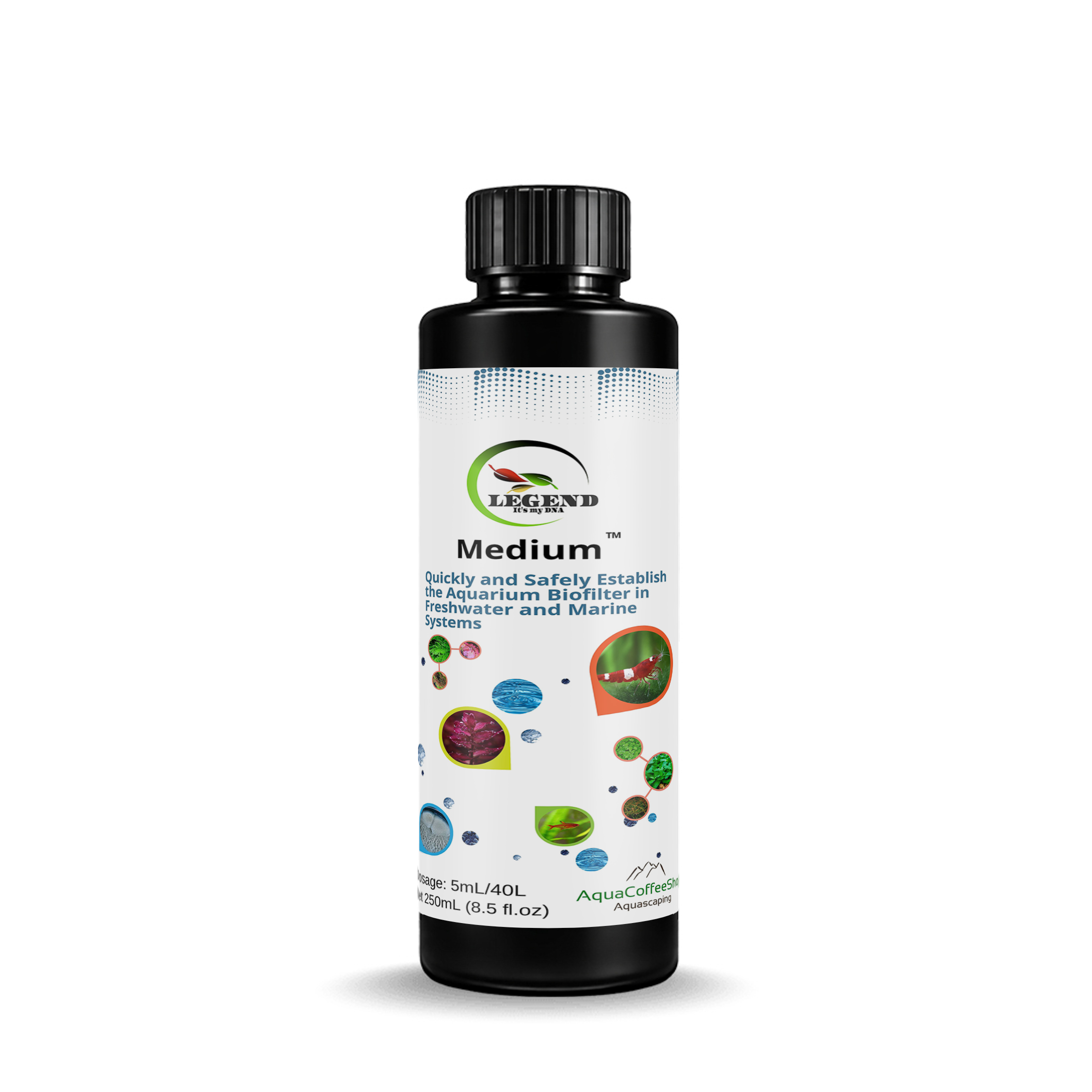
- Seeding the aquarium with bacteria from a reputable commercial source, such as LGND Medium™.
As the biofilter cycles, ammonia rises until enough nitrifying bacteria are present to convert it to nitrite. Ammonia levels then begin to fall while nitrite levels increase. Nitrite keeps rising until enough bacteria are present to convert it to nitrate. Unless there are many plants, nitrate levels will rise slowly until a water change is carried out.
Test ammonia and nitrite every few days until first the ammonia level and then the nitrite level peak and fall back to zero. Tanks that are stocked before the biofilter is working properly will often turn cloudy because of heavy blooms of non-nitrifying bacteria.
Keeping ammonia at zero
After the cycling period, test for ammonia once a week. An established, well-managed aquarium should have no detectable ammonia. If ammonia is present, check that:
- The biofilter is large enough.
- The biofilter does not need cleaning.
- You are not overfeeding (based on what the biofilter can handle, not what the fish will eat).
- The tank is not overstocked.
- The tank is not excessively dirty.
- The biofilter has not been cleaned too thoroughly – vigorous cleaning removes the nitrifying bacteria.
- The alkalinity or pH has not dropped and affected the biofilter.
- No chemicals or medications have been used that killed the bacteria in the biofilter.
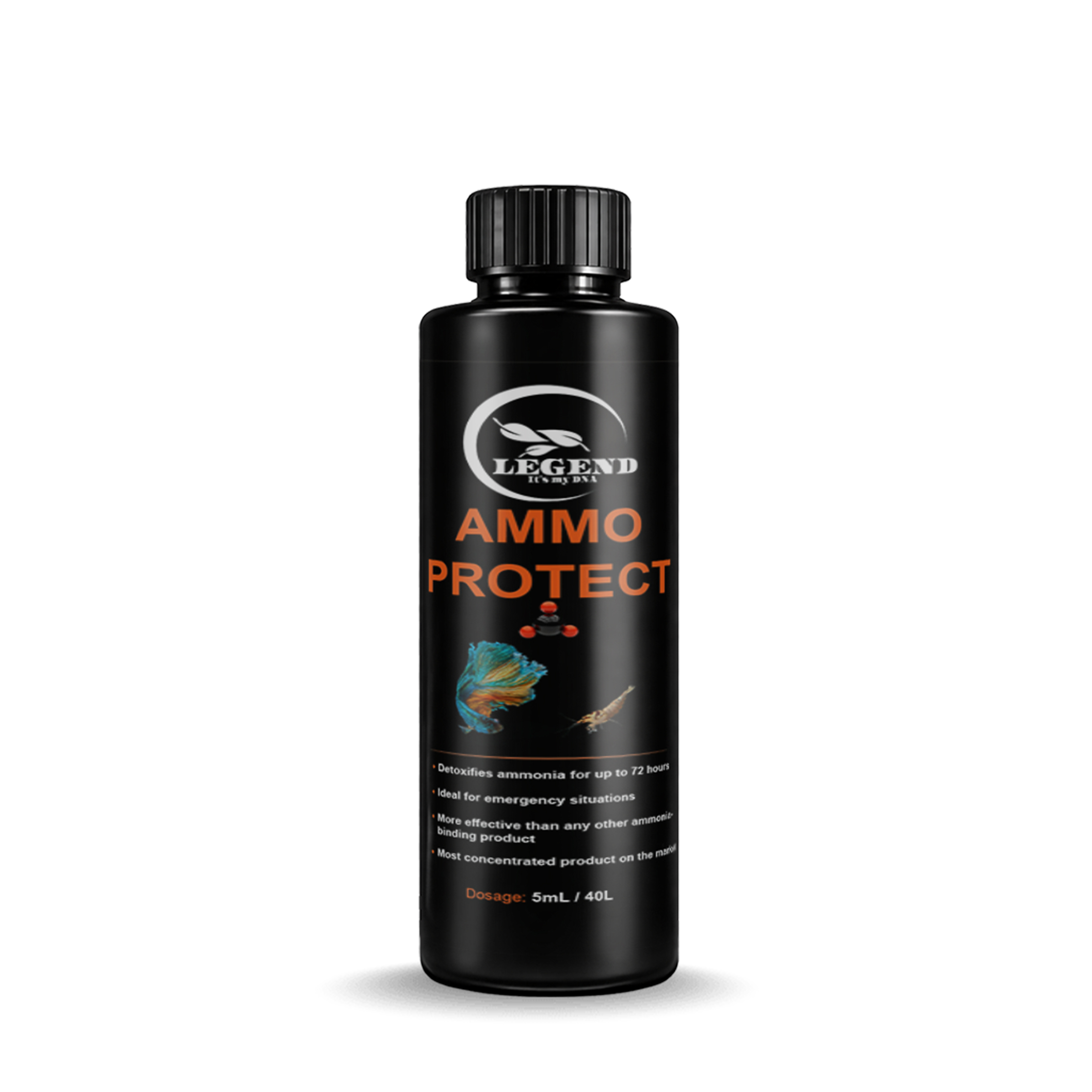
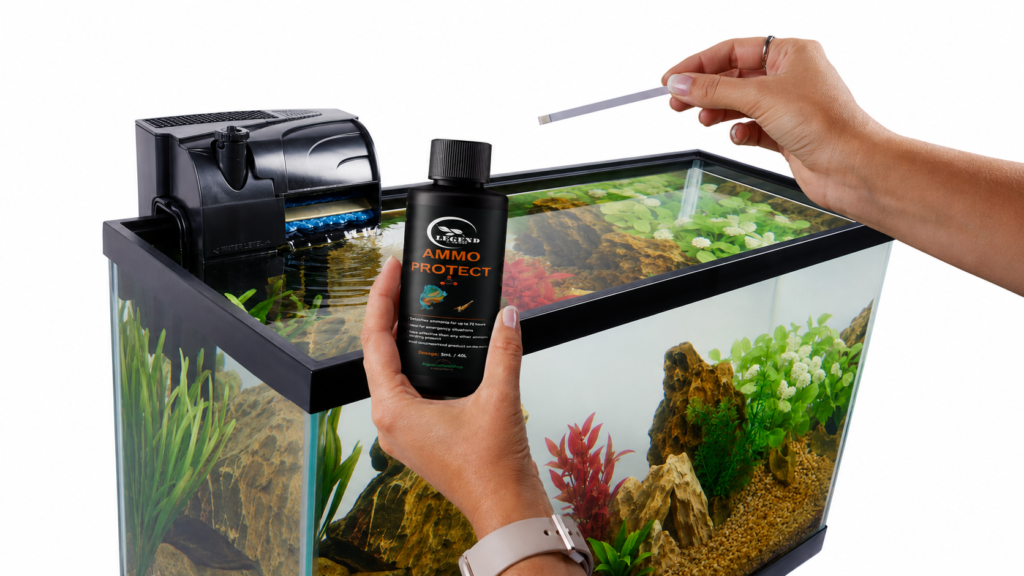
Emergency: if ammonia is detected while fish are in the tank, carry out a partial water change with conditioned water of the same temperature, reduce feeding, and use LGND AmmoProtect™ to detoxify ammonia while the filter bacteria catch up.
Control ammonia and support your biofilter